House Democratic subcommittee report outlines web of alleged corruption, wire fraud and pay-to-play schemes
The interim report, “From Vanity to Insanity: How the White House Cheated the American People Out of Their 250th Birthday”, outlines a web of alleged corruption, wire fraud and pay-to-play schemes orchestrated through a shadow corporation embedded within the National Park Foundation (NPF).
The document was produced by Democratic staff of the House of Representatives’ natural resources committee’s oversight and investigations subcommittee. It has not been officially adopted by the committee.
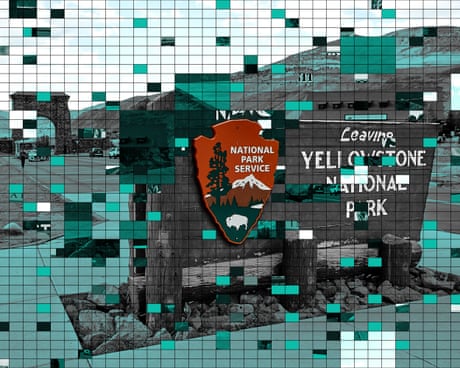
‘A sanitized view of America’: inside Trump’s campaign to erase US history from national parks
Read more
———————————————————————————————————–
“Under President Donald Trump, this anniversary has been hijacked and perverted into a hotbed of corruption and self-enrichment,” it states, contending that the machinery built for a national commemoration was converted “into an apparatus for raising and spending money in service of the President’s ego, political ideology, and pet projects”.
How Trump is making the US’s 250th anniversary about himself – video
In 2016 Congress established the US semiquincentennial commission, operating as the non-profit America250 Foundation, to plan the nation’s 2026 celebrations on a non-partisan basis. However, under Trump, the White House launched a sustained pressure campaign to subsume the commission.
When America250 leadership resisted its demands to shift focus toward partisan, campaign-style spectacles, the Trump administration created Freedom 250 as a wholly owned subsidiary of the congressionally chartered NPF.
The interim report finds that, by taking control of the NPF board and installing key campaign operatives such as Meredith O’Rourke and Chris LaCivita, the White House secured an opaque vehicle that enjoyed the NPF’s non-partisan credibility and tax-exempt status while operating outside standard government transparency laws.
Jared Huffman, a California congressman who is the top Democrat on the natural resources committee, said: “I can’t, in my time here in Congress, remember anything even remotely like this: watching this trusted, venerable charity organisation, the National Parks Foundation, literally be hijacked for a craven political agenda that tries to steal the celebration of America’s 250th anniversary and turn it into something that’s all about Trump, advancing this very divisive agenda and even enriching Trump and those around him.”
The interim report alleges that Freedom 250 surreptitiously diverted resources intended for America250 for its own benefit, leaving America250 scrambling for funds.
Sources interviewed by Democrats on the committee said fundraisers including O’Rourke misled prospective America250 donors by providing them with Freedom 250’s banking and routing numbers instead. The report finds this could constitute wire fraud and charitable solicitation fraud under federal and District of Columbia law.
This deceit extended to the entertainment industry. Artists recruited for the kickoff of the Great American State Fair – including Martina McBride and Young MC – were assured the event was non-partisan, only to face social media backlash when the event was revealed to be a Trump-backed rally. In the words of Young MC, the booking was a “bait and switch”.
The investigation also outlines how Freedom 250 effectively put a price tag on presidential access, circulating sponsorship packages starting at $500,000 and climbing above $10m for tiered recognition, culminating in a “historic photo opportunity” with Trump.
The report also points to perhaps the most clear example on 14 June when the White House hosted a huge Ultimate Fighting Championship (UFC) event on the South Lawn to celebrate the president’s 80th birthday. The event was heavily sponsored by corporations facing impending federal regulation and used vast government resources for “Super Bowl-level security” marshalled by the Department of Homeland Security (DHS).
Fighters received bonuses in “USD1”, a cryptocurrency issued by World Liberty Financial, a trust run by the president’s children, and Trump personally bought up to $50,000 in stock in the UFC’s parent company weeks before the event.
Freedom 250 has also functioned as a conduit for steering federal funds to Trump campaign loyalists. Event Strategies – the same firm that planned the January 6 rally that preceded the US Capitol attack – was awarded 18 federal contracts totalling roughly $40m, along with an indefinite delivery master contract worth up to $100m.
Beyond lucrative contracts, the administration is accused of building a partisan political database disguised as a government domain. Freedom 250’s website, initially managed by former “Department of Government Efficiency” (Doge) employees known for past data leaks, extensively logs user data.
Event registration is powered by Campaign Nucleus, a firm founded by Brad Parscale, a veteran of Trump election campaigns. Campaign Nucleus openly boasts about using artificial intelligence to analyse personal data and target “persuadable” voters. Unsuspecting visitors, such as attenders of a free Fifa World Cup Fan Zone on the National Mall, unwittingly fed their personal information directly into this Republican campaign apparatus.
The report also focuses on the ideological overhaul of the semiquincentennial. Freedom 250 replaced America250’s civic engagement focus with overt Christian nationalist programming, operating in tandem with the Religious Liberty Commission, which recently recommended repealing the Johnson amendment to allow churches to engage in partisan politics.
A central feature of this effort was “Freedom Trucks” – a federally funded fleet of mobile museums dispatched to schoolchildren across the nation. Supplied with content from the conservative PragerU [the Prager University Foundation] and Hillsdale College, these exhibits recast the founding of the US as an exclusively Christian project, embracing demonstrable falsehoods.
Exhibits include an AI-generated George Washington claiming that “our rights are a gift from God”, a statement the first president is not documented as having made, alongside antisemitic tropes suggesting that Jewish merchants financed the revolutionary cause while omitting they also fought and died for it.
Concurrently, the administration aggressively moved to erase historical realities, removing national park signage detailing slavery, forced removal of Indigenous peoples and climate change. Huffman said it amounted to an attempt to reshape American identity to fit a narrow rightwing agenda.
“It’s a fantasy that airbrushes out the more complicated parts of our history – slavery, the Native American genocide, the actual secular ideals on which our government was founded. It wasn’t the opening of the clouds and some revealed covenant with God as they would have you believe.”
As Washington barrels towards Fourth of July, with another Trump speech and a big fireworks display planned for the national mall, Huffman acknowledges that Freedom 250 is unstoppable. But his goal now is exposure.
“The one thing we can do is make sure the American people know what they’re doing in our name and with our tax dollars,” the congressman said. “We should do that because what they have pulled off here is a potential template for other betrayals of public trust that they and maybe future generations will attempt if we don’t challenge them.”
Where are all the cries of stolen valor the right likes to throw at real military service? This is the nation’s highest military honor for draft dodging tRump to even mention it soils it. His sons never served either. No one in their family has. They are takers not givers. Typical dictator behavior, giving awards and medals to themselves, rewriting history to prove their greatness hoping to hide what slimy unworthy people they are. As someone who is proud to have served in two branches of the US military this makes me both angry and sad. Hugs
President Donald Trump suggested that he would give himself and either Eric Trump or Donald Trump Jr. the Congressional Medal of Honor to become part of what would be the third father-son pair to be given the award.
“I see my two beautiful sons sitting there. I think I’m going to give one to myself, one to them, and we’ll have a threesome,” Trump said at the opening of the Theodore Roosevelt Presidential Library in Medora, North Dakota, on July 1.
The Medal of Honor is the nation’s highest military honor and is intended to honor servicemembers that distinguish themselves in combat “conspicuously by gallantry and intrepidity at the risk of his life above and beyond the call of duty.”
This is a kids summer camp and the kids seen are very young. The claim is this is an evangelical church in Kentucky doing a mock execution of an illegal immigrant. The kids are chanting “Take him out and blow him up”. The screen says praise the lord and pass the ammo. My question is when did jesus preach hate? I know the bible does, but Christians are to be followers of Jesus and aside from the money changers event Jesus preached love and acceptance of the stranger. Bible traditions said to welcome the stranger. Sodom and Gomorrah is about god being angry the town was not hospitable to the strangers and wanted to dominate them rather than feed / house them.
I googled when did Jesus preach hate and I got this summary. Jesus did not preach hate; rather, He taught love and forgiveness. In Matthew 5:43-44, He instructs, “Love your enemies and pray for those who persecute you,” emphasizing the importance of loving others, even those who may oppose us. Below was a list of biblical hate passages including two in John. Guess what I read the chapters. The passages were not direct sayings from or attributed to Jesus. So what god are these “Christians” following? As to the YouTuber showing this he is not trans, he is a VTuber and uses an avatar his fans make and like. As all things on the internet it can get weird and he thought that as people kept sending him stuff as a female and a furry he would b=play along with the bit. I skip the fan art stuff at the beginning as that stuff bores me and it is only a few minutes. Hugs
This church performed a mock execution in front of CHILDREN at a BIBLE CAMP. And somehow these people are the ones saying that the left is indoctrinating their kids, meanwhile they normalize public executions to children.
Super informative and indepth in the science of paleontology. Aron Ra knows his stuff and has the ability to instruct or impart the information in a way that is easier to understand. If you like learning about dinosaurs then you should enjoy this video. Hugs
AronRa explores the evolutionary history of sauropods, tracing their development from early archosaurs to the massive, long-necked creatures found in the fossil record. This examination focuses on anatomical transitions, such as skeletal pneumaticity, and the taxonomic debates surrounding their classification relative to theropods and other dinosaur lineages.
This is the fundamentalist Christian nationalist religious majority trying hard to find a reason that violating any religion not christianity was OK. They do not deny that the man’s religious beliefs were violated and ignored even after the courts had ruled to protect them. That shows a bias against the non-Christian religions. The SCOTUS has no qualms lying and using false misleading inform to create ruling in favor of the Christian religion and those that want to push / force it on to everyone else in the country. Hugs
For more than two decades, the Supreme Court has issued a long series of wins for plaintiffs seeking to protect their religious practices. On June 23, 2026, though, the majority delivered an uncommon defeat in this contentious area.
Landor v. Louisiana Department of Public Education and Safety, a 6-3 judgment, rejected the claim of Damon Landor, a Rastafarian whose hair was forcibly shaved in prison. Landor had worn long dreadlocks for almost 20 years as an expression of his beliefs – part of a biblical practice known as the “Nazarite vow.” Like lower court judges, the Supreme Court did not dispute that officials violated Landor’s rights. However, the high court’s majority ruled that he could not sue individual officials at the prison.
The case stands out for at least three other reasons.
First, Landor v. Louisiana underscores the complexity and far-reaching nature of religious freedom laws in the United States and the increasingly diverse faith traditions to which they apply. Christians now represent 62% of the American population, down from 78% in 2007, while 29% have no religious affiliation and 7% belong to other faith traditions.
Second, Landor’s case gained support from many groups typically at odds over how to protect religious freedoms – groups disappointed withthis week’s decision.
Finally, the case highlights the religious rights of the nearly 2 million people in U.S. prisons, jails and detention and correctional facilities – and the challenge of holding their public employees accountable when those rights are violated.
Toward the end of his sentence, Landor was transferred to a different correctional facility in the state. There – with three weeks left for Landor to serve – the warden ignored the judicial order, directing guards to shackle Landor and forcibly shave his head.
After finishing his sentence, Landor filed suit for money damages under the Religious Land Use and Institutionalized Persons Act. The act forbids the government and its officials from imposing “substantial burden(s)” on incarcerated people’s First Amendment right to the free exercise of religion. It also protects religious groups from discrimination through zoning restrictions.
Journey through the courts
In 2022, a federal trial court in Louisiana condemned Landor’s treatment but rejected his claim, concluding that money damages were not an appropriate remedy under the act.
The following year, the 5th U.S. Circuit Court of Appeals “emphatically condemn(ed) the treatment that Landor endured.” However, the panel unanimously affirmed the lower court’s decision, based on its earlier ruling that plaintiffs cannot sue government officials in their individual capacities for monetary damages – only the institution.
At issue was not whether Landor’s rights had been violated but whether he could sue an individual official, namely the warden, for monetary damages. During oral arguments on Nov. 10, 2025, the Supreme Court seemed skeptical.
Legal dilemma
That skepticism was reflected in the court’s ultimate ruling. It was essentially a procedural ruling about the Religious Land Use and Institutionalized Persons Act rather than a judgment on the merits of Landor’s religious freedom claim.
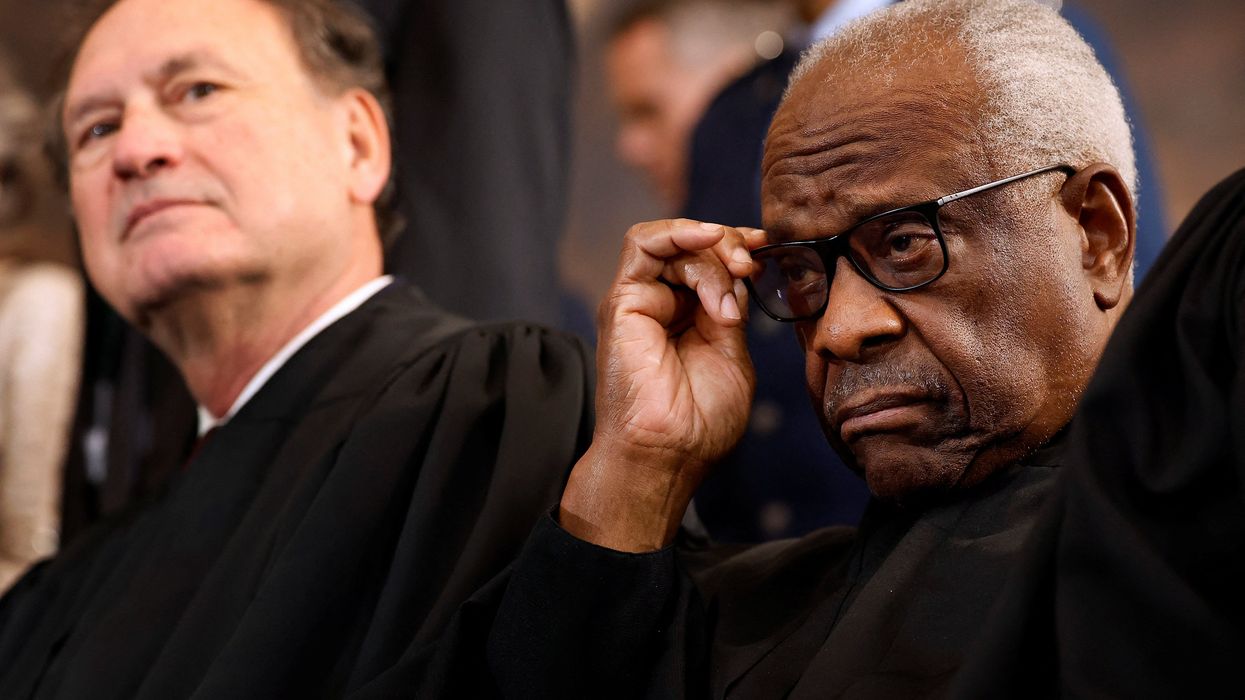
Justice Neil Gorsuch wrote the majority opinion, joined by Chief Justice John Roberts and Justices Clarence Thomas, Samuel Alito, Brett Kavanaugh and Amy Coney Barrett. Justice Ketanji Brown Jackson’s dissent was joined by Justices Sonia Sotomayor and Elena Kagan.
The majority’s argument that Landor could not sue centered on the spending clause of the U.S. Constitution – the source of Congress’ authority to create the Religious Land Use and Institutionalized Persons Act. The spending clause allows the legislature to spend money to provide for the “general Welfare of the United States.” If a state or institution uses federal funds, their officials agree to certain conditions; if they violate those conditions, Congress can remove funding.
But the spending clause does not give Congress authority to hold individual employees accountable, Gorsuch argued in his 18-page opinion. Prison officials had not “voluntarily and knowingly consented to answer private suits” under the act, and so they could not be held directly liable for monetary damages. Otherwise, Congress would have “effectively unbridled police power.”
Jackson’s 29-page dissent disagreed with the majority’s interpretation of the spending clause. The ruling, she contended, “jettisons ‘a long line of this Court’s precedents’” under which “Congress has been able to use its spending power to reach beyond direct recipients of federal funds.” As such, she worried that the court’s order imposed a “novel consent requirement.”
Jackson also lamented the decision’s potential consequences for inmates. Although the goal of the Religious Land Use and Institutionalized Persons Act was to protect prisoners’ faith practices, she worried that people “like Landor who suffer violations of their religious freedom in state prisons – no matter how blatant – will often be left remediless.”
Bigger picture
At a glance, the Landor case appears to be a procedural disagreement rather than one over religious freedom.
However, I argue Landor v. Louisiana must be viewed as a setback for religious liberty, raising a serious question about whether minority faiths have as much protection under the First Amendment as larger religions. The decision is also something of a surprise to me, because the Supreme Court has recently upheld free exercise rights in multiple high-profile cases, almost all of which involve Christianity – such as a football coach’s ability to pray on the field after public school games.
Portions of this article originally appeared in a previous article published on Nov. 6, 2025.
Wow. There is a lot of historic information in this video. The author / presenter has quick cuts to other personality characters she plays to highlight the absurdity of some positions held by the hierarchy. She delvesdeeply into the idea of what is proper femininity, who steps outside it, and who thinks they are responsible for judging or enforcing it. She delves into how many fights against change and equality are about fears by men of emasculation. The lowering of men’s status. When she elaborates on suffrage, all the fears seem to be that allowing women to vote would give women the right to be men and force men to be women. Seem familure? She goes into detail on how each repressive opressive responce to equal rights comes down to the same phrases such as save the children, save the family, or the claims that society it self will end. The clips she intersperses go by far too quickly so I had to stop the video to read them but she does describe what is on them. The begining was choppy and it took me a bit to get her style of presentation but once I did I found it very informative fillwed with facts, history, and fun to watch. Hugs
The transgender bathroom ‘debate’ isn’t new (but it is stupid). I’m looking at you TERF’s…
Looking back through history, gender politics is consistently entangled with race, class, misogyny, and disability. Minority groups existing outside the ‘norm’ are attacked as ‘radicals’ or menaces to society…
But what prevails each time we face oppression AND causes real change in our society?
In this video Dan hits back on the myth that in the bible / god will any sex outside of marriage is a sin. He shows how many different sexual acts and groupings were included as Ok for the morality of the time. I am listening to Separation of church and hate by John Fugelsang. In the book he explains that the bible is a collection of writings written for the people of that time, the culture of that time, and about the morality accepted at that time. He shares examples where different authors flat out disagree with each other, but they were separated by ceneriesin time. Dan mentions something like that here and how each author had their own view of sex and what was moral. He explains sexual agency and how in the bible for it to be considered sex a penis needed to be involved going into an orifice of some person with lesser status than the man with the active penis. I like at the end where he talks of the dangers and torments of telling developing children going through puberty that simply touching themselves is a sin, makes them an abomination to god, and will condemn them to hell. Hugs
The former transportation secretary described it as “the ugliest thing that has happened to me since my career in service began.”
Pete Buttigieg, former secretary of transportation, during the National Action Network 35th Anniversary Convention on April 10, 2026, in New York City.Adam Gray / Bloomberg via Getty Images
Former Transportation Secretary Pete Buttigieg said his family has been targeted in a “politically motivated hoax” after someone made what police characterized as a false report to Child Protective Services alleging he committed crimes against his children.
In a Substack post Friday, Buttigieg wrote that an anonymous caller reported to CPS that his 4-year-old twins he shares with his husband, Chasten, were “at risk.”
“The caller said that he had spoken to a woman who claimed to have met me at a conference several years ago in Alabama, where she said I told her that I had committed unspeakable violent crimes, and the caller believed my children were still at risk,” Buttigieg wrote.
Buttigieg, a prominent Democrat and potential 2028 presidential contender, likened the incident to “swatting” — when someone calls 911 to falsely report an immediate threat, often at a public figure’s home — “but with Child Protective Services instead of a SWAT team.”
As a result of the allegation, Buttigieg said a CPS worker told him he could not be around his children unsupervised for 24 hours while the allegation was investigated. He and his husband dropped the children off with their grandparents for the night, beginning what Buttigieg described as “among the darkest hours of my life.”
He said the children were also interviewed by CPS the following day.
The CPS worker assigned to the case did not find anything to substantiate the allegation, Buttigieg said, adding that he doesn’t know the identity of the person who made the accusation.
The police officer on the case “made clear that he believed this was politically motivated, and said it would not be referred to a prosecutor,” Buttigieg wrote. “Nothing in the forensic interview with the children, which was conducted by trained personnel, had led to concerns.”
In a statement provided to MS NOW on Friday afternoon, the Michigan State Police confirmed receiving an “anonymous report” in the case, adding that police and CPS workers determined it was false.
“False reports are dangerous and divert law enforcement officers and Child Protective Services workers from responding to legitimate emergencies and protecting vulnerable children and families,” the state police said.
In his Substack, Buttigieg characterized the incident as part of broader rise in political violence that leaders on both sides of the aisle face. He called it the worst thing he experienced in politics to date.
“Many times over the years, I have been denounced, yelled at, protested, threatened, and heckled,” Buttigieg wrote. “I’ve been through political attacks in office, death threats in public life, and rocket attacks in war. But this is the ugliest thing that has happened to me since my career in service began.”
“For twenty-four deeply distressing hours,” he continued, “we had no idea what I was accused of or what was about to happen. We could not understand someone abusing the system like this in order to hurt me and my family with an absurd and easily refuted allegation of a horrific crime.”
He also suggested homophobia may have motivated the incident, noting that it occurred during Pride month, which conservatives have long attacked , soon after he posted a photo of his family on Instagram to celebrate Father’s Day. Buttigieg has been subject to homophobic remarks from high-profile officials during his time in the public eye, including from former Vice President Mike Pence, who mocked his decision to take parental leave while serving as transportation secretary, and former co-chair of the Michigan Republican Party, Meshawn Maddock, who called him “a weak little girl” in 2022.
As Buttigieg noted on Substack, making a false report of felony child abuse is a crime under Michigan state law, punishable by a fine of up to four years in prison or a fine of up to $2,000, or both.
Buttigieg was slated to campaign in Tucson this Sunday for JoAnna Mendoza, a Democratic candidate for the state’s 6th Congressional District, but he has canceled the trip, Tucson.com reported.
Spokespeople for the Justice Department and the local prosecutor’s office representing the county where Buttigieg lives did not immediately respond to questions from MS NOW on Friday afternoon. The Michigan Attorney General’s Office declined to comment.
A draft final report from President Trump’s Religious Liberty Commission released on Friday calls for “building bridges between church and state,” a seeming reversal of a longstanding U.S. legal principle. “Americans must know their rights and stand with courage when those rights are challenged,” the commission’s report reads.
“To preserve this freedom, we must build bridges, not walls, between the City of God and the City of Man. If we do so, we will pass on a free and prosperous nation to the next generation,” it continues.
The argument is a stark reversal of the legal principle that calls for the separation of church and state. The phrase “separation of church and state” does not explicitly appear in the Constitution, but the Constitution states “Congress shall make no law respecting an establishment of religion, or prohibiting the free exercise thereof.”
Oh, unfortunately, we think about it every day.A “faith director” in every federal agency isn't a victory for religious liberty. It's an attempt to weave religion into the machinery of government. That's exactly why we have church-state separation.
Neither is Jesus.The Constitution says Congress shall make no law respecting an establishment of religion or prohibiting the free exercise thereof. "Separation of church and state" is the shorthand for that principle, one the Supreme Court has recognized for decades.

Illustration: Guardian Design

Pete Buttigieg, former secretary of transportation, during the National Action Network 35th Anniversary Convention on April 10, 2026, in New York City.Adam Gray / Bloomberg via Getty Images


