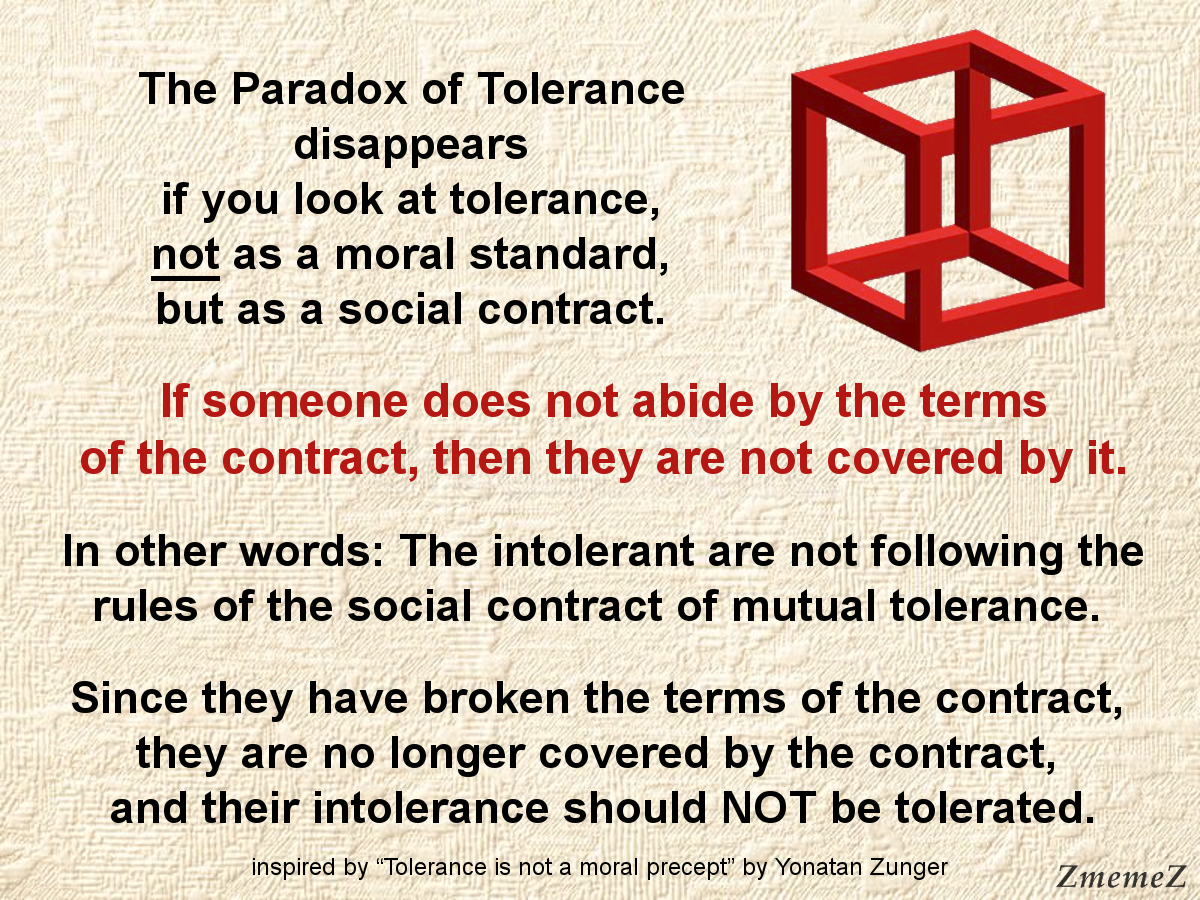




















Responding to bigoted claims of biblical morality


Barney Frank, a liberal congressman and trailblazer for gay rights, dies. He was 86.
Byย ย STEVEN SLOAN
WASHINGTON (AP) โ Barney Frank, the longtime Democratic congressman and leading liberal who brought new visibility to gay rights and crafted the most significant reforms to the financial system in a generation, has died. He was 86.
Frank died late Tuesday, according to Jim Segel, Frankโs former campaign manager and close friend.
After representing broad swaths of Bostonโs suburbs in Congress for 32 years, Frank and his husband moved to Ogunquit, Maine. He entered hospice there in April with congestive heart failure and is survived by his husband, Jim Ready, and sisters, the longtime Democratic strategist Ann Lewis and Doris Breay, along with brother David Frank.
A self-described โleft-handed gay Jew,โ Frank was known for his acerbic wit, combative style and focus on marginalized communities. He represented the partyโs left wing while keeping close with Democratic leaders who sometimes frustrated progressives.
He is best known as a pioneer for LGBT rights. After decades of grappling with his sexuality, he publicly came out as gay in 1987, the first member of Congress to do so voluntarily. With his 2012 marriage to Ready, he became the first incumbent lawmaker on Capitol Hill to marry someone of the same sex.
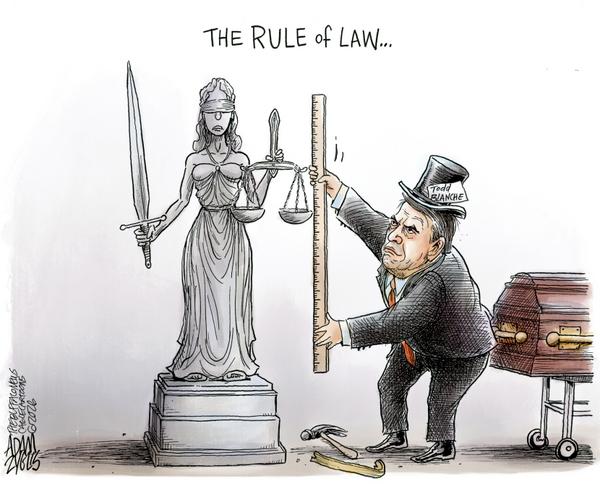
And why judges should never be elected, but should be nominated by those who practice law, then confirmed by elected legislators and governors. All should be public so we the people know what and when it’s happening. When judges have to run for the bench, politics overtakes and minimizes law, tainting decisions.

Judge Carl Folsom III // Linkedin
This weekend, a Kansas judge issued a scathing 117-page rebuke of the state’s ban on gender-affirming care for transgender youthโand in doing so, methodically dismantled the case against that care. In his ruling, Judge Carl Folsom III worked through the testimony of the state’s witnesses one by one, finding that its anti-transgender โexpertsโโroutinely paraded by groups like the Alliance Defending Freedom, SEGM, and Genspectโoffered opinions built on “cherry-picked information, conjecture, and research taken out of context,” and granting their testimony little to no weight. He then laid out 349 individual findings of fact, drawn from scientific evidence and the testimony of credible medical experts, documenting the safety and efficacy of gender-affirming care. He ultimately found that the ban likely violates the Kansas Constitutionโwhich guarantees broader protections than its federal counterpart. That distinction matters enormously: because the ruling rests on state constitutional grounds, it is largely insulated from the U.S. Supreme Court and its decision in Skrmetti, which closed the federal courthouse door to these challenges but left the state one wide open.
“Allowing a transgender adolescent with gender dysphoria to experience their endogenous puberty when puberty blockers are medically indicated according to the Endocrine Society Clinical Practice Guideline is highly likely to result in irreversible physical changes that create enormous short- and long-term distress and gender dysphoria,” Folsom wrote. “Thus, there was substantial evidence that S.B. 63 not only fails to protect minors, but also endangers them, by prohibiting the use of GnRH agonists when medically indicated.”
Before weighing the evidence, the judge first had to determine who could credibly be considered an expert. Republican Attorney General Kris Kobach brought forward a litany of anti-trans witnesses familiar from litigation defending these bans. Among them was James Cantor, a Toronto psychologist who has built a career testifying for states defending care bans despite no clinical experience treating transgender minorsโand who was once quietly dropped from a Florida Board of Medicine hearing after it emerged he had served on the advisory council of the Prostasia Foundation, a group that has worked to destigmatize pedophilia. Folsom wrote that Cantor “has not conducted any original scientific research on the efficacy or safety of gender dysphoria treatments,” and noted he is not licensed to treat anyone under 16 and has never diagnosed a minor with gender dysphoria. The judge then catalogued a record of self-contradiction: Cantor “stated that ‘peer-review is the line between acceptable and not’ but himself relied on non-peer reviewed sources,” cited systematic reviews while ignoring that “the authors of those reviews stated that their work should not be used to prevent the provision of gender-affirming medical care,” and “makes several statements which have no scientific support,” including that gender dysphoria might be a misdiagnosis of borderline personality disorder. “The Court gives Dr. Cantor’s testimony little weight,” Folsom concluded.
The judge turned next to Farr Curlin, a Duke University doctor and theologian who was an author of the Trump administration’s HHS report on pediatric gender dysphoriaโa document authored anonymously by a roster of hate-group affiliates and career anti-trans activists, and which deadnames Christine Jorgensen, one of the first Americans to get gender affirming surgery. Curlin, Folsom noted, “is not a pediatrician, nor is he a psychiatrist or endocrinologist,” and “has never treated anyone for gender dysphoria.” Curlin testified that gender-affirming care is “ethically problematic”โbut under questioning, the breadth of what Curlin considers unethical became clear. He believes that prescribing birth control for contraception is also “ethically problematic,” because “blocking the capacity for reproduction seems contrary to the purposes of health.” He believes in vitro fertilization is “ethically problematic” as well. He testified that when gender-affirming care reduces fertility, it “prevents the realization of the basic good of marriage, since sexual capacities make possible the one flesh union of marriage.” By his own admission, Folsom noted, Curlin’s views are “radically counter to current medical orthodoxy.” The judge found his opinions “appear motivated by his personal views as opposed to a methodology applicable in the field of medical ethics,” and gave his testimony “little-to-no weight.”
The judge also had pointed words for the state’s roster of prominent anti-trans activists. Chloe Cole, the countryโs most prominent anti-trans detransitioner, testified about receiving care as a minor in Californiaโbut Folsom noted that Cole “admittedly did not receive care in Kansas,” and that the plaintiffs’ expert Dr. Angela Turpin testified the care Cole described “would not have occurred in Kansas” and would have been inconsistent with the clinical guidelines Kansas providers actually follow. Her testimony was given “less weight.” Corinna Cohn, another anti-trans detransitioner who has testified for care bans across the country and who has publicly denied that transgender people existed before 1939 or were victims of the Holocaust, did not appear at the hearing at all. The judge noted that Cohn’s affidavit described “care accessed as an adult” and treatment “in Wisconsin”โnothing to do with minors, or with Kansasโand gave it “little weight.” And then there was Jamie Reed, the self-styled “whistleblower” who built a national profile on lurid, largely unsubstantiated accusations against a St. Louis gender clinic and who has gone on Fox News to describe being transgender as a delusion. Reed also did not testify and could not be cross-examined. Folsom gave her affidavit “little weight,โ and had scathing remarks towards her lack of expertise:
โThe Court gives thus Jamie Reedโs affidavit little weight, given that she is not a medical provider or mental-health professional. In addition, her affidavit primarily addresses her experiences with a clinic operating outside of Kansasโthus, it does not rebut or refute the credible, uncontroverted testimony about clinical practice within the state of Kansas,โ read the order.

Folsom then turned to set the record straight on the care banned by Kansas. Working through the testimony of the credible medical experts, he set out 349 separate numbered findings of fact, each documenting some component of what the science actually shows about gender-affirming care. Among them: that “the currently available body of medical research, as a whole, shows that gender-affirming medical care is effective at improving mental-health outcomes for adolescents with gender dysphoria,” supported by “over 20 scientific studies” finding the treatments “effective at alleviating gender dysphoria and improving a variety of mental-health outcomes, including anxiety, depression, and suicidality.” Folsom found that “for many adolescents, gender-affirming medical care provides significant relief from gender dysphoria and decreases depression, anxiety, suicidality, and thoughts of self-harm.” On the question of regret, the talking point most relied upon by the law’s defenders, the court found, based on the Kansas clinic’s own long-term follow-up data, that 99.2% of patients who received gender-affirming care “continue to identify as transgender into adulthood,” and that of the remaining 0.8%, “most did not regret the medical treatment they received.”
Folsom reserved some of his sharpest fact-finding for the Cass Review and claims over European care. The state’s experts pointed to systematic reviews from the United Kingdom, Sweden, Finland, Germany, and Norway as โproofโ the science had turned. Folsom found otherwise. “None of these systematic reviews recommend categorically banning gender-affirming medical care for adolescents,” he wrote, and “the United Kingdom, Sweden, Finland, Germany, and Norway have not categorically prohibited gender-affirming medical care for minors”โas Kansas had. On the Cass Review specifically, Folsom found that its authors “changed their methodology from the methodology they said they would use in their preregistration, which is a deviation from standard academic publishing practices designed to minimize bias,” and “used idiosyncratic standards in scoring and thus excluded studies that had made important contributions to the field.” Far from recommending a ban, the court found, the Cass Report “reaches conclusions that are similar to those in the Endocrine Society Guideline and WPATH Standards of Care” and “concludes that there are young people who absolutely benefit from gender-affirming care.” On Germany, the state had the facts backwards: Folsom found that “Germany’s recent guideline endorses the provision of gender-affirming medical care”โa reference to the 2025 guidelines fromย 26 medical organizations across Germany, Austria, and Switzerland, the largest European medical consensus on transgender youth care ever produced.

The judge’s ruling rested on the Kansas constitution. Folsom found the plaintiffs likely to succeed on the claim that SB 63 violates the fundamental right of parents, guaranteed by Section 1 of the Kansas Constitution Bill of Rights, to make medical decisions for their children. Section 1, he wrote, quoting the Kansas Supreme Court, “protects the core right of personal autonomyโwhich includes the ability to control one’s own body, to assert bodily integrity, and to exercise self-determination” and “allows Kansans to make their own decisions regarding their bodies, their health, their family formation, and their family life.” Because SB 63 strips parents of that right, Folsom applied strict scrutiny, the most demanding standard in constitutional law, and found the state had failed to meet it. That reasoning was used recently before in Kansas politics for another issue. The same Section is what protects abortion rights in the state. In previous abortion-related decisions, the Kansas Supreme Court held that Section 1 secures “an inalienable natural right of personal autonomy”โlanguage the court used to strike down abortion restrictions, and that Kansas voters chose to keep in 2022 when they rejected a constitutional amendment that would have stripped it away.
For now, gender-affirming care is legal again in Kansas. The injunction is temporary, blocking SB 63 while the case is litigated, and Attorney General Kris Kobach has said he will appeal, calling the ruling “a stark example of judicial activism.” But the appeal faces a structural problem. Because the decision rests entirely on the Kansas Constitution, the U.S. Supreme Court and its ruling in Skrmetti have no power to disturb itโa state’s highest court is the final word on its own constitution. And the Kansas Supreme Court, where the case is ultimately likely to land, has five of seven justices appointed by Democratic governors and has repeatedly upheld the same Section 1 personal-autonomy right that Folsom relied on here.


I can’t get the entire article here; I think I used up all my NYFT freebies for life back in 2004. However, I got a blurb, and because it’s pertinent to our interests, I’m still posting the link for anyone who’d like to see the story. It’s surprising, as is the story after this one.
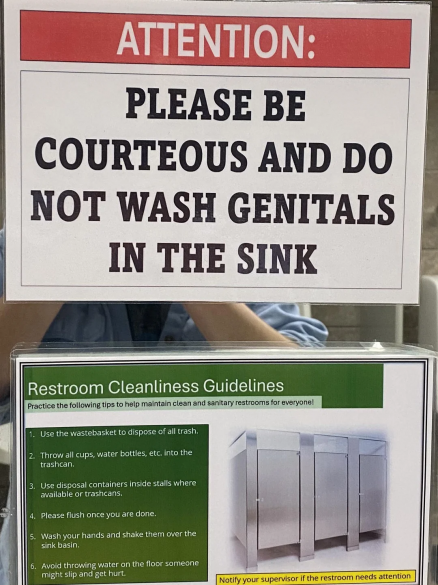
TOPEKA โ A few spaces are exempt from Kansasโ new bathroom law that requires people to use the facilities in government buildings that match their sex assigned at birth, Attorney General Kris Kobach said in an opinion he released Wednesday.
Kobachโs opinion, which carries no legal authority, exempted some government spaces โ such as skilled nursing rooms at the Kansas Office of Veteransโ Services โ from complying with the bathroom law that went into effect in February.
He issued the opinion in response to an April letter from Justin Whitten, Gov. Laura Kellyโs chief counsel, who asked for clarification on defining โmultiple-occupancy private spacesโ and โfacilitiesโ as written in Senate Bill 244.
โThis was a poorly written and ambiguous law, which is why the governorโs office sought an attorney general opinion,โ said Olivia Taylor-Puckett, spokeswoman for Kelly. โThe AGโs opinion provides new clarity on the more limited scope of SB 244 as inapplicable to places that are more โresidential in characterโ like a cabin or hospital room.โ
The bill became law in February after passing through contentious legislative debate, including a veto from Kelly that was overturned. At the time, Kelly questioned vague language in the bill and how it would apply to some state facilities.
The law sets high fines for agencies that fail to comply and smaller fines escalating to class B misdemeanors for those who violate the law. Critics said the law doesnโt specifically address implementation, leaving agencies statewide struggling to determine what to do to comply.
In an April letter, Whitten asked Kobach to render an opinion on whether spaces like hospital rooms, prison cells and bedrooms in public buildings are considered โmultiple-occupancy private spacesโ under the law.
The letter asked for definition of โfacilities,โ and whether Kansas Department of Wildlife and Parks cabins throughout the state and Kansas Office of Veteransโ Services nursing facility rooms must adhere to the law.
โSB 244 makes no distinction based on a โfacilityโsโ purpose and instead focuses on the existence of a mere possibility of whether an individual may be in a state of undress in front of another individual,โ Whittenโs letter said.
Arguments that the hospital is the โfacilityโ rather than the patient room are โuntenable,โ he said. The hospital building would fit under the lawโs definition of a public building, while the room would be the private space, Whitten said.
โIf your answer relies on finding an ambiguity in Senate Bill 244 with the term โfacilities,โ we ask that you work with the Legislature in the 2027 session to clarify this ambiguity,โ he said.
Citing a dictionary definition of โfacilityโ and saying that โin the absence of a contrary definition, words in a statute should be given their โordinary, contemporary, common meaning,โโโ Kobach said neither the skilled nursing rooms or the Kansas Department of Wildlife and Parks rental cabins meet the definition of โfacility,โ which exempts them from the law.
Kobach said SB 244 listed examples of rooms the bill applies to.
โThe debate surrounding SB 244 focused on the types of rooms listed in the statute โ restrooms, locker rooms, changing rooms, and shower rooms โ and the risks to safety and privacy when individuals of one biological sex use facilities designated for individuals of the opposite biological sex,โ his opinion said.
Kobach said the Legislatureโs intent didnโt include stopping a married couple from sharing a nursing home or assisted living facility room or to prevent people in those facilities from receiving guests of the opposite sex.
Prison cells, however, more closely match the type of facilities addressed in the law, Kobach said, which means multiple-occupancy cells must only be shared by prisoners of the same sex.
Taylor-Puckett said attorney general opinions are generally given โpersuasive but not binding weight in a courtroom.โ She recommended that individuals and entities should consult with their attorney with regard to any decisions about complying with SB 244.
Harper Seldin, senior staff attorney for the American Civil Liberties Union, said he was glad to see some spaces exempted from the law but that the opinion reinforced what civil rights activists contended from the beginning: The vagueness of the law makes it difficult to enforce and understand.
โThis uncertainty about whether people just living their lives are going to run afoul of this law, I think demonstrates both that the law was meant to terrorize and also that itโs poorly drafted,โ he said.
Some Kansans and legislators objected to SB 244 being termed an โanti-transโ bill. But Seldin said the interpretation reinforces that it is a bill targeted at transgender and intersex people.
โThese interpretations really continue to try to find ways to push transgender and intersex people out of public life, while making sure that people who arenโt transgender donโt feel any disruption whatsoever,โ he said. โIt does seem to very strongly suggest that this law was really targeted at transgender people and is not actually responsive to any concerns about safety or privacy.โ
Seldin said any concerns about safety and privacy arenโt related to reality in Kansas.
Seldin is representing two Lawrence transgender men who are challenging the bathroom law in court, with the next hearing scheduled for Sept. 29 through Oct. 2. That will be an evidentiary hearing regarding the ACLUโs request for a temporary injunction of the law, Seldin said.
This story was originally reported by Orion Rummler of The 19th. Meet Orion and read more of their reporting on gender, politics and policy.
The federal government is escalating efforts to seek private medical data for children undergoing gender-affirming care, as at least one hospital faces the first known criminal probe of its kind.
Last week, NYU Langone Hospitals in New York City received a grand jury subpoena for information about young patients who received gender-affirming care at their facilities anytime in the past six years.
A grand jury subpoena indicates that a federal criminal investigation is underway. This would be a first in regards to gender-affirming care.
The subpoena came from the U.S. Attorneyโs Office in the Northern District of Texas, part of the Justice Department. The office is also seeking the names of hospital employees involved in providing gender-affirming care. The government has previously sought medical records of transgender kids from other states, and so have Texas officials, but not like this.
Parents of trans youth under the age of 18 who have received care at NYU Langone got a notification from the hospital alerting them to the grand jury subpoena. According to that notification and to the hospitalโs public statement, NYU Langone is one of several institutions that received a subpoena May 7. The hospital said it is still evaluating how it will respond to it.
New York law prevents the disclosure of medical records related to gender-affirming care and abortion except in limited circumstances and broadly prohibits law enforcement from cooperating with investigations into gender-affirming care. This sets up a potential legal fight over the subpoena.
Several legal battles are currently playing out in response to other attempts from the government to obtain trans kidsโ medical records.
Eleven families just filed a class-action lawsuit to block the Justice Department from obtaining confidential information about young trans patients seeking gender-affirming care. The agency sent more than 20 subpoenas last summer to doctors and clinics involved in providing such care, with the intent to investigate โhealthcare fraud, false statements, and more.โ Both the Justice Department and the Federal Trade Commission (FTC) have sought to investigate gender-affirming care as medical fraud.
Multiple judges halted these DOJ subpoenas in their tracks, after hospitals fought back. A federal judge in Massachusetts called the agencyโs investigations into gender-affirming care โmotivated only by bad faith.โ A judge in Colorado, who blocked a similar subpoena, said patient medical records must be protected from โimproper disclosure.โ
Separately, a federal judge this month temporarily blocked the FTC from investigating two medical groups that support gender-affirming care for transgender people. Those groups, the World Professional Association for Transgender Health (WPATH) and the Endocrine Society, were served civil investigative demands for years of internal records and financial information. Both groups sued.
Over the past year, hospitals in states like New York, where gender-affirming care is legally protected, have come under pressure by the federal government to halt care for trans youth. For patients, that care has been spotty: earlier this year, NYU Langone halted gender-affirming care for young patients, citing โthe current regulatory environmentโ as a key reason. More than 40 hospitals across the country have done the same, per STAT News.
Gender-affirming care for trans youth primarily refers to hormone therapy and puberty blockers used to treat gender dysphoria, which is a medical condition that can cause significant distress. Very few transgender youth seek and access surgeries. Restricting gender-affirming care is a top priority of the Trump administration, which has proposed regulations to greatly restrict the care for youth and stated its opposition to trans identity as a whole.
Hi everyone,
My webcomic about a transgender girlโs page, Assigned Male Comics, is currently down because it got hacked during the night, along with my personal page and the french version of the comic. After receiving several thousands of death threats in the past few days for making my art, my address was also posted on several forums. I am currently in a safe place and my roommate and I will move away before the end of the week.
Today. May 17th. International Day Against Homophobia, Biphobia and Transphobia. I just want people to be aware that this is what you get for being trans on the internet and for reframing transness into something positive and empowering. Iโd also like to acknowledge that this attack was mostly planned because of four explicit reasons :
1. I am a woman
2. I am trans
3. I support non-binary people
4. I support intersex people.
I will keep making my comics, no worries. Folks at Facebook are currently making sure this wonโt happen again before I can put my page back up. Nothing was lost.
I know many of my readers will be worried. This is my personal profile, also if you can share this as widely as possible so it reaches them, it would be greatly appreciated.
You can still read my comics on tumblr :ย http://assignedmale.tumblr.com
or on paper :ย http://assignedmale.etsy.com
and support my work on Patreon :ย www.patreon.com/assignedmale
I also set up a Paypal donation email if you want to help with the relocating : sophie@assignedmale.com
Thanks everyone for your support. โค


Statue in North Korea.ย


In this interview Graham Platner responds to his detractors accusations against him.ย He discusses the tattoo and the Jewish times report that says he had talked about it while working at a bar during the time frame he was not working there.ย So there is not any credible evidence that he knew what the tattoo was.ย As he said why would he have danced with it in full display to his extended Jewish family?ย ย He makes sense.ย He understands that people may not like him because he is not polished as a politician.ย He also says he stumbles verbally and struggles to correct and improve himself.ย ย It was a hard hitting interview and Platner came off as very reasonable.ย Hugs

Now, in this must-watch interview, Mehdi Hasan speaks to Platner not just about his vision for a progressive โpolitical revolutionโ in Washington DC but also about some of his controversies, including his social media and his tattoo that resembled a Nazi symbol.